Aristocles passage
from Eusebius, Praeparatio Evangelica 14.18.1–4.
(A summary of Pyrrho's philosophy was preserved by Eusebius, quoting Aristocles, quoting Timon, in what is known as the "Aristocles passage."[)
"Pyrrho says that things themselves are equally indifferent, unstable, and indeterminate; and therefore neither our sensations nor our opinions are true or false. For this reason we ought not to trust them, but should remain without opinions, without inclinations, and without wavering, saying concerning each individual thing that it no more is than is not, or that it both is and is not, or that it neither is nor is not."
ἀδιάφορα — adiaphora ( undifferentiated / without distinction ) - anattā ( not-self )
ἀστάθμητα — astathmēta (unstable / not fixed) - dukkha ( unsatisfactory / incapable of providing lasting satisfaction )
ἀνεπίκριτα — anepikrita ( undecidable / indeterminate ) - anicca ( impermanent )
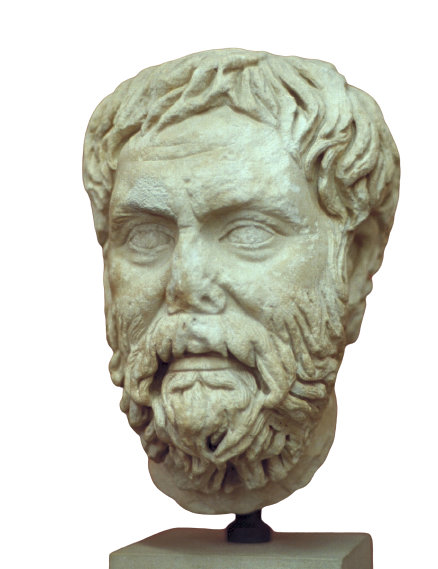
Pyrrho of Elis, marble head, Roman copy, Archaeological Museum of Corfu